Measuring the Footprint of Urban Forestry in Canada
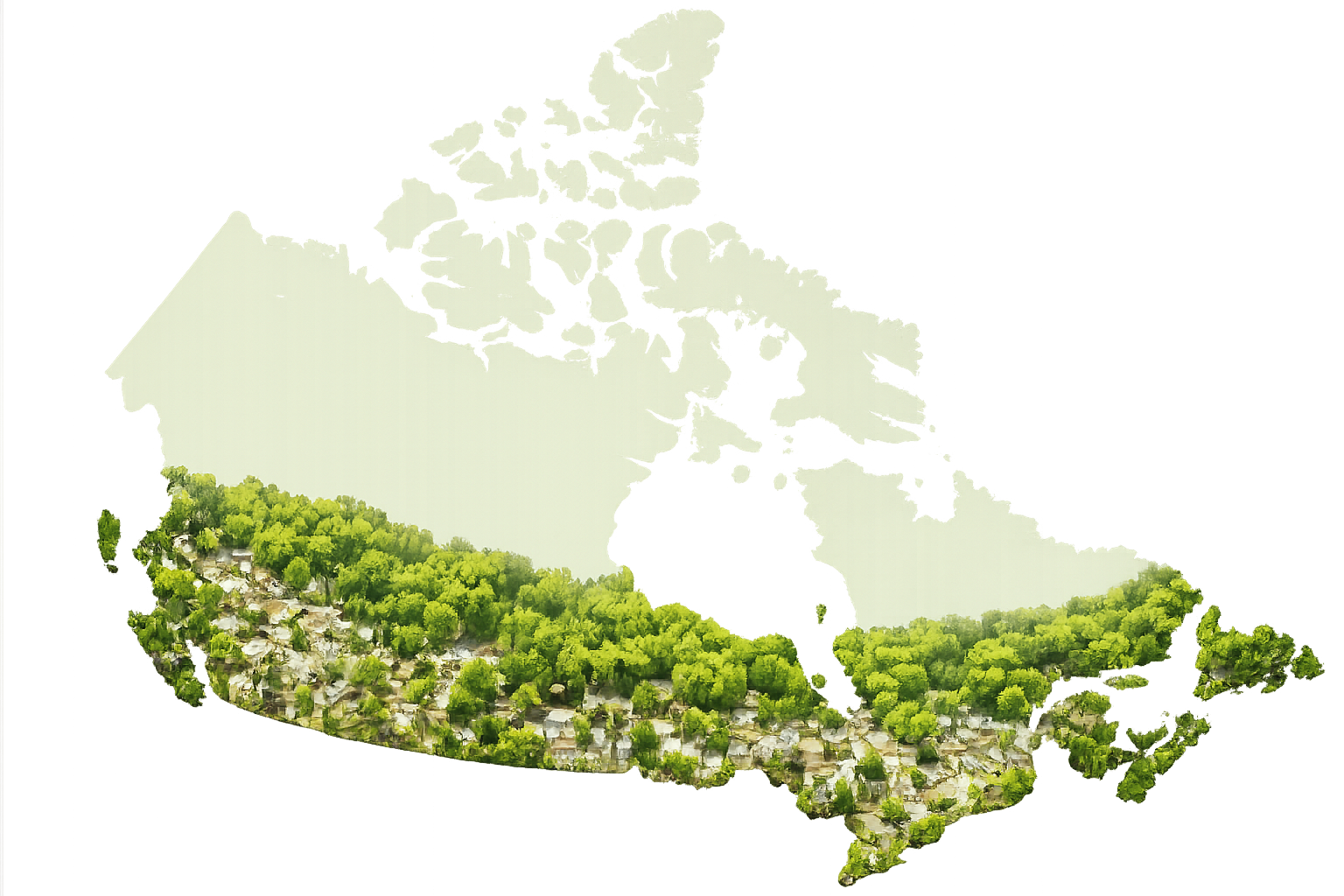
 The Urban Forestry Footprint Mapping project was started by Dr. Puric-Mladenovic and Dr. Adrina C. Bardekjian in
2017. It was created to visually, graphically, and numerically show the
extent and intensity of municipal urban forestry activities and
stewardship across Canada. The goal was to help people better
understand the current state and extent of urban forestry work in
Canadian municipalities. Knowledge gained from the project
supports collaboration, research, and in-depth studies. The project
also aims to share knowledge about urban forestry and related
activities with a wider audience. Our hope is to serve as an
information platform for those assessing, improving, or developing
urban forestry programs. This audience includes practitioners, city
planners, stewardship groups, researchers, and interested individuals.
The Urban Forestry Footprint Mapping project was started by Dr. Puric-Mladenovic and Dr. Adrina C. Bardekjian in
2017. It was created to visually, graphically, and numerically show the
extent and intensity of municipal urban forestry activities and
stewardship across Canada. The goal was to help people better
understand the current state and extent of urban forestry work in
Canadian municipalities. Knowledge gained from the project
supports collaboration, research, and in-depth studies. The project
also aims to share knowledge about urban forestry and related
activities with a wider audience. Our hope is to serve as an
information platform for those assessing, improving, or developing
urban forestry programs. This audience includes practitioners, city
planners, stewardship groups, researchers, and interested individuals.
With both the 2018 (Footprint Map V 1.0) and 2025 (Footprint Map V 2.0) versions of the mapping available, meaningful comparisons and differences can be analyzed over the past 7 years.
For both the 2018 and 2025 mappings, a set of seven categories was established to help guide searching through the information. These categories are Urban Forestry Departments, Professionals, Plans and Management Programs, Policies, By-Laws, Inventories, and Pest Disease and Control. The Urban Forestry Footprint Maps are paired with graphs to present information in a more meaningful, measurable way.
The term "Urban Forestry" was coined by Dr. Eric Jorgensen at the Faculty of Forestry, University of Toronto, in 1965. Urban Forestry refers to greening-related activities, such as street tree planting and maintenance, institutional greening, and park creation and management in towns and cities. Over the years, Urban Forestry in Canada has evolved and expanded, with various municipal departments practicing it from small towns to large metropolitan areas. Since its inception, Urban Forestry has grown as a discipline and practice in Canada. The geographic distribution and magnitude of urban forestry initiatives within Canadian municipalities remain insufficiently characterized and are potentially underreported. This study, based on systematic data collection and spatial mapping of urban forest activities, uses these data to assess the current status of urban forestry and stewardship practices across Canadian urban jurisdictions. Urban greening-related activities, such as street tree planting and maintenance, institutional greening, and park creation and management, have a history in Canada as long as the establishment of permanent settlements, such as cities, towns, and villages.
Urban tree and greening activities, such as street tree planting, institutional greening, and natural areas and park management, have existed in Canada since the formation of cities, towns, and villages. Over the years, urban forestry in Canada has evolved and expanded. It has been practiced with varying intensity, from small towns to large metropolitan areas. It is embedded across various municipal departments and is implemented under different names. It consists of diverse elements that are often integrated within other disciplines and municipal activities. It encompasses a broad and interdisciplinary field of practice, including policy and regulatory development; management and maintenance; public education; stewardship; arboriculture operations; land-use planning; to urban forest conservation.
About the Footprint of Urban Forestry in Canada
The Urban Forestry Footprint Mapping project was started by Dr. Puric-Mladenovic and Dr. Adrina C. Bardekjian in
2017. It was created to visually, graphically, and numerically show the
extent and intensity of municipal urban forestry activities and
stewardship across Canada. The goal was to help people better
understand the current state and extent of urban forestry work in
Canadian municipalities. Knowledge gained from the project
supports collaboration, research, and in-depth studies. The project
also aims to share knowledge about urban forestry and related
activities with a wider audience. Our hope is to serve as an
information platform for those assessing, improving, or developing
urban forestry programs. This audience includes practitioners, city
planners, stewardship groups, researchers, and interested individuals.With both the 2018 (Footprint Map V 1.0) and 2025 (Footprint Map V 2.0) versions of the mapping available, meaningful comparisons and differences can be analyzed over the past 7 years.
For both the 2018 and 2025 mappings, a set of seven categories was established to help guide searching through the information. These categories are Urban Forestry Departments, Professionals, Plans and Management Programs, Policies, By-Laws, Inventories, and Pest Disease and Control. The Urban Forestry Footprint Maps are paired with graphs to present information in a more meaningful, measurable way.
Urban Forestry in Canada
The term "Urban Forestry" was coined by Dr. Eric Jorgensen at the Faculty of Forestry, University of Toronto, in 1965. Urban Forestry refers to greening-related activities, such as street tree planting and maintenance, institutional greening, and park creation and management in towns and cities. Over the years, Urban Forestry in Canada has evolved and expanded, with various municipal departments practicing it from small towns to large metropolitan areas. Since its inception, Urban Forestry has grown as a discipline and practice in Canada. The geographic distribution and magnitude of urban forestry initiatives within Canadian municipalities remain insufficiently characterized and are potentially underreported. This study, based on systematic data collection and spatial mapping of urban forest activities, uses these data to assess the current status of urban forestry and stewardship practices across Canadian urban jurisdictions. Urban greening-related activities, such as street tree planting and maintenance, institutional greening, and park creation and management, have a history in Canada as long as the establishment of permanent settlements, such as cities, towns, and villages.
Urban tree and greening activities, such as street tree planting, institutional greening, and natural areas and park management, have existed in Canada since the formation of cities, towns, and villages. Over the years, urban forestry in Canada has evolved and expanded. It has been practiced with varying intensity, from small towns to large metropolitan areas. It is embedded across various municipal departments and is implemented under different names. It consists of diverse elements that are often integrated within other disciplines and municipal activities. It encompasses a broad and interdisciplinary field of practice, including policy and regulatory development; management and maintenance; public education; stewardship; arboriculture operations; land-use planning; to urban forest conservation.